







 新华报业网
AI governance cannot go without Sino-US cooperation
By Shen Yang | CHINA DAILY
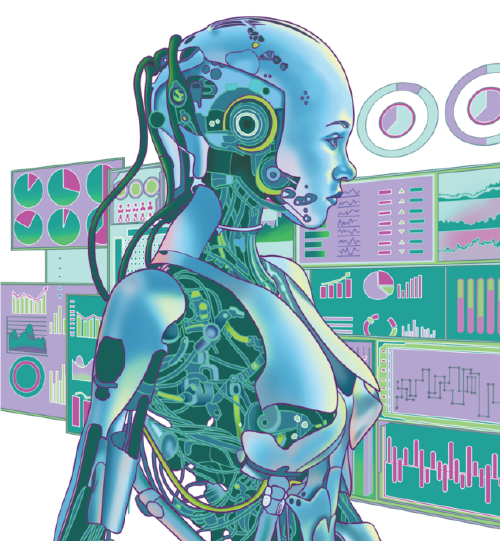
Since the launch of ChatGPT-3.5 in November 2022, the field of artificial intelligence, especially the Chat Generative Pre-trained Transformer model, has made significant progress, creating substantial opportunities and, equally substantial, risks. As such, both China and the United States, as global leaders in AI, can play pivotal roles in shaping the AI sector's development.
AI technology is rapidly advancing, particularly in natural language processing, machine learning and complex decision-making capabilities. These advancements signal AI's potential to better understand and emulate human thought processes, fostering greater efficacy across sectors, including improving productivity and driving economic growth.
Yet the transformative impact of AI on the labor market is a double-edged sword. True, AI is creating new employment opportunities. But it is also true that AI could make certain professions obsolete. So it is essential to take measures to prevent or minimize job loss or displacement.
Besides, education and policy adjustments are required to help workers to improve their skills and/or learn new skills, in order to adapt to the changes in the job market. And while governments and educational institutions must collaborate to provide necessary training and resources, and prepare workers to navigate the new work environment, the focus should be on developing strategies that mitigate job losses and harnesses the potential for creating new jobs, ensuring a balanced and inclusive approach to the evolving AI landscape.
To be sure, the future of AI extends beyond its standalone advancement and convergence with diverse fields such as bioscience, materials science and energy. In healthcare, for instance, AI applications can enhance precision medicine, improving treatment and facilitating the discovery of new medicines. As for energy management, AI holds the potential to optimize energy distribution, reduce waste and contribute to environmental protection and sustainable development.
Ethical and moral considerations have become increasingly important due to AI's rapid development, and ensuring transparency in AI decision-making, addressing issues of accountability and preventing the inappropriate use of AI technology have become challenges.
Also, public understanding and acceptance of AI are crucial for the healthy development and responsible use of AI. Education, advanced education in particular, can help individuals better understand the potential and limitations of AI and its social impact.
Governments, educational institutions and businesses should therefore work together to popularize knowledge about AI, so as to foster rational discussions on and responsible use of AI, ensuring it develops robustly and contributes positively to society.
As the impact of AI continues to expand globally, the establishment of an international unified set of AI rules and usage standards has become increasingly crucial. These rules and standards should encompass the demands for transparency in AI decision-making, safeguard data privacy and prevent AI from being used for unethical purposes.
The international community, on its part, must collaboratively strive to formulate and enforce these standards through cross-border cooperation, not least because AI holds immense potential in improving global governance. For instance, using data analysis and pattern recognition, AI can predict and address global conflicts, environmental issues and international economic challenges. So international organizations and governments can leverage AI technology to manage resources more efficiently, respond to crises, and promote global peace and prosperity.
This makes it necessary for China and the US to participate in global discussions on AI governance, because of the significant influence of the two countries in the research and application of AI technology, as well as their crucial roles in shaping relevant policies and standards related to AI.
Since the overarching goal of global AI governance is to ensure technological advancements benefit humankind as a whole while mitigating potential adverse impacts, global cooperation under the framework of a community with a shared future for mankind is paramount for the healthy development of AI. By sharing best practices, coordinating policies and establishing global standards, we can maximize AI technology's global benefits.
The development of AI technology should be inclusive and equitable, and its benefits should extend to all. Hence, considering the needs and interests of different countries and social groups throughout the technological advancement process is crucial to ensuring that.
Also, leveraging AI to optimize resource utilization and environmental protection strategies will have a profound impact on building a sustainable future. The development of AI creates both opportunities and challenges, so it is imperative for the world, especially China and the US, to collaborate to ensure AI development propels economic growth and technological innovation, fosters global cooperation, safeguards social justice, and promotes environmental sustainability.
For this to happen, however, the international community, particularly leading nations in AI technology, needs to make concerted efforts. Through collaboration and strategic policy formulation, the international community can help AI technology become a powerful force driving collective human development, not a source of division and contradictions.
As leaders in AI technology, China and the US play a crucial role in global AI governance and the construction of a community with a shared future for mankind. And global collaboration can help us establish ethical standards, adapt to the changing job market, improve global governance and spread knowledge about AI education. To make such a scenario a reality, governments and businesses need to make collective efforts and implement coordinated policies.
In short, by holding regular dialogue and fostering global cooperation, we can achieve a more equitable, inclusive and sustainable future and make AI technology a positive driver for the common destiny of humankind.
The author is a professor of journalism and director of the Metaverse Culture Laboratory at Tsinghua University. The views don't necessarily reflect those of China Daily.
If you have a specific expertise, or would like to share your thought about our stories, then send us your writings at opinion@chinadaily.com.cn or comment@chinadaily.com.cn.







 Android版
 iPhone版