







 新华报业网
新华报业网
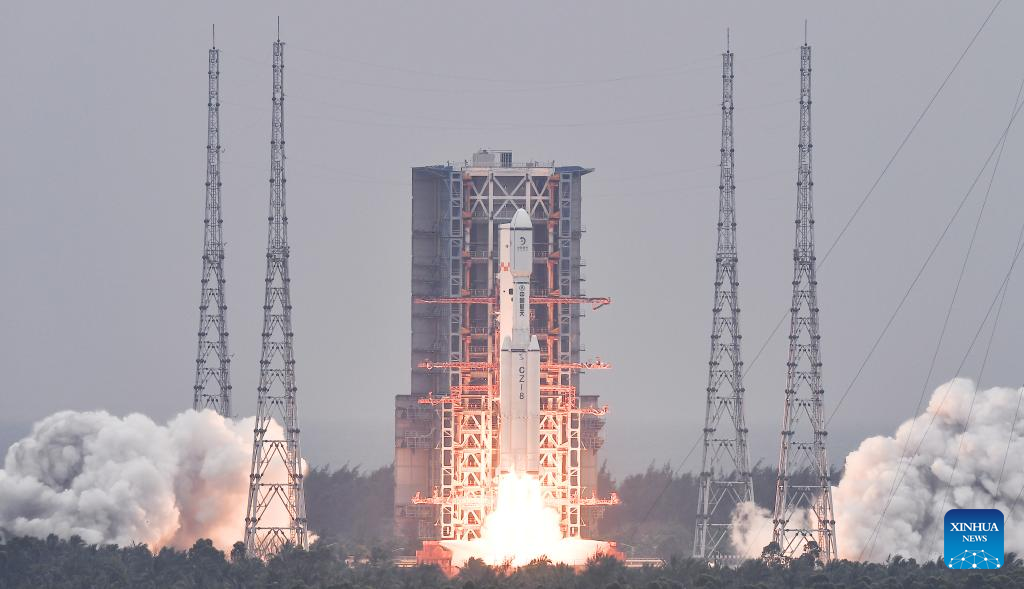
A Long March-8 rocket, carrying the relay satellite Queqiao-2 for Earth-Moon communications blasts off at the Wenchang Space Launch Center in south China's Hainan Province, March 20, 2024. (Xinhua/Yang Guanyu)
WENCHANG, Hainan, March 20 (Xinhua) -- China launched a new relay satellite on Wednesday to provide Earth-Moon communications services, a key step for its future lunar exploration missions such as retrieving samples from the far side of the moon.
A Long March-8 rocket, carrying the satellite dubbed Queqiao-2, or magpie bridge-2, soared into the sky at 8:31 a.m. from the Wenchang Space Launch Site in south China's Hainan Province.
After 24 minutes of flight, the satellite separated from the rocket, and entered the planned Earth-Moon transfer orbit with the perigee at 200 kilometers and the apogee at 420,000 kilometers. The satellite's solar panels and communications antennae were unfolded, according to the China National Space Administration. ■
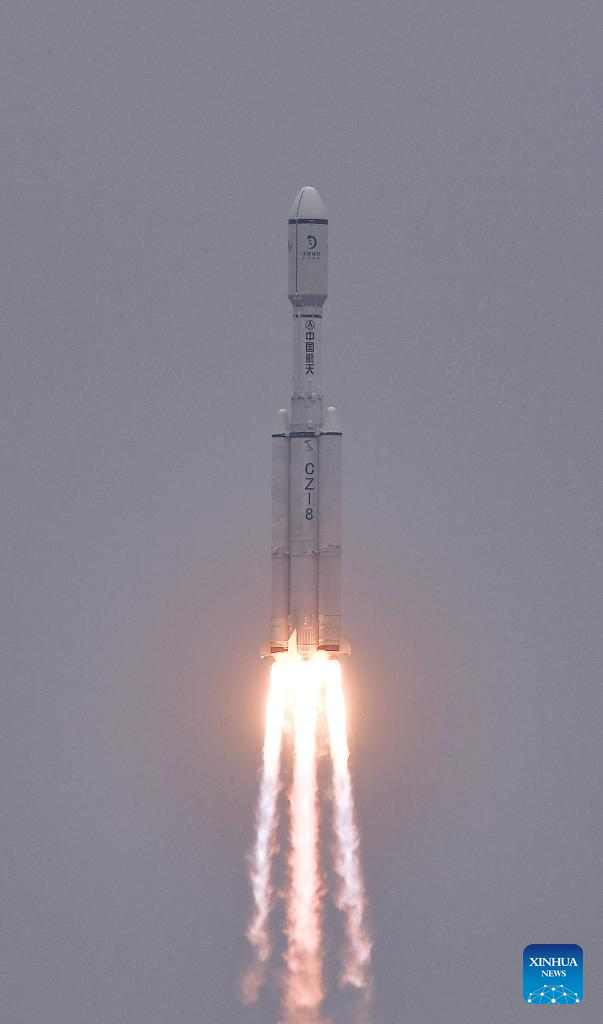
A Long March-8 rocket, carrying the relay satellite Queqiao-2 for Earth-Moon communications blasts off at the Wenchang Space Launch Center in south China's Hainan Province, March 20, 2024. (Xinhua/Yang Guanyu)
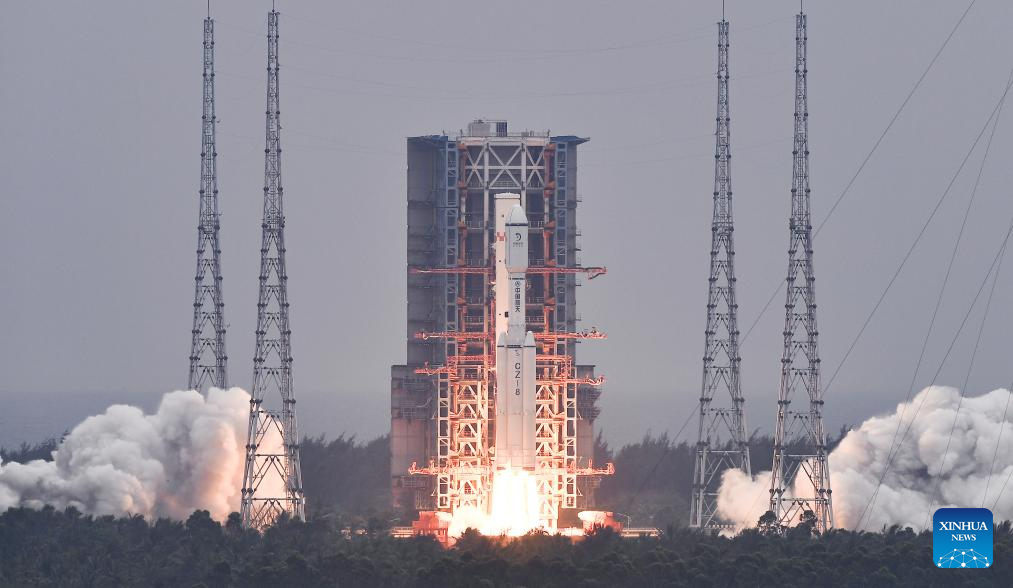
A Long March-8 rocket, carrying the relay satellite Queqiao-2 for Earth-Moon communications, blasts off at the Wenchang Space Launch Center in south China's Hainan Province, March 20, 2024. After 24 minutes of flight, the satellite separated from the rocket, and entered the planned Earth-Moon transfer orbit with the perigee at 200 kilometers and the apogee at 420,000 kilometers. The satellite's solar panels and communications antennae were unfolded, according to the China National Space Administration. (Xinhua/Yang Guanyu)
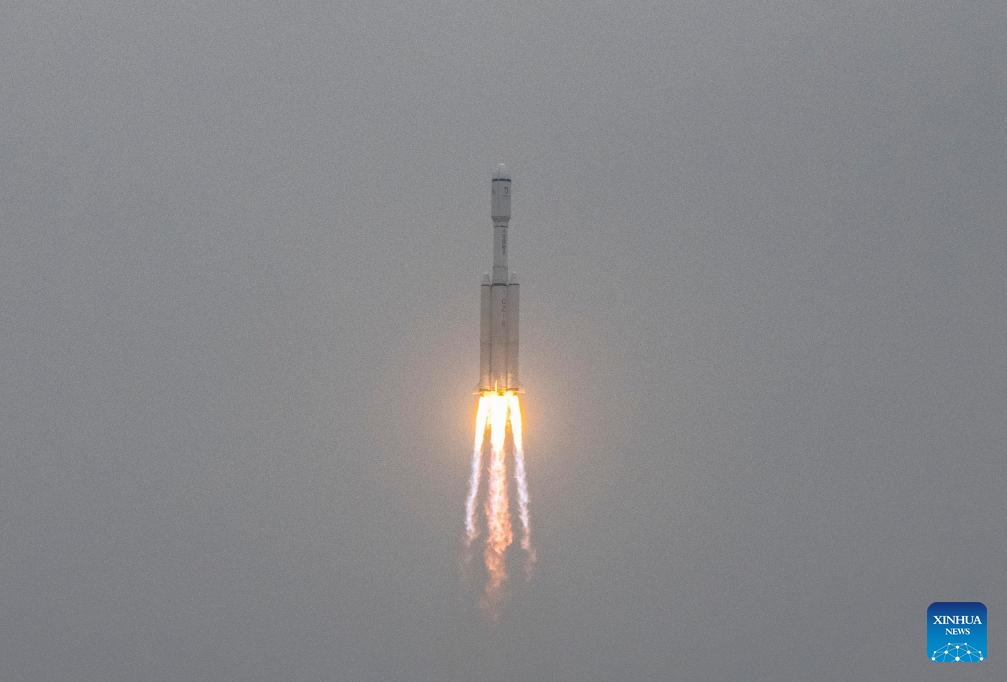
A Long March-8 rocket, carrying the relay satellite Queqiao-2 for Earth-Moon communications, blasts off at the Wenchang Space Launch Center in south China's Hainan Province, March 20, 2024. After 24 minutes of flight, the satellite separated from the rocket, and entered the planned Earth-Moon transfer orbit with the perigee at 200 kilometers and the apogee at 420,000 kilometers. The satellite's solar panels and communications antennae were unfolded, according to the China National Space Administration. (Xinhua/Pu Xiaoxu)
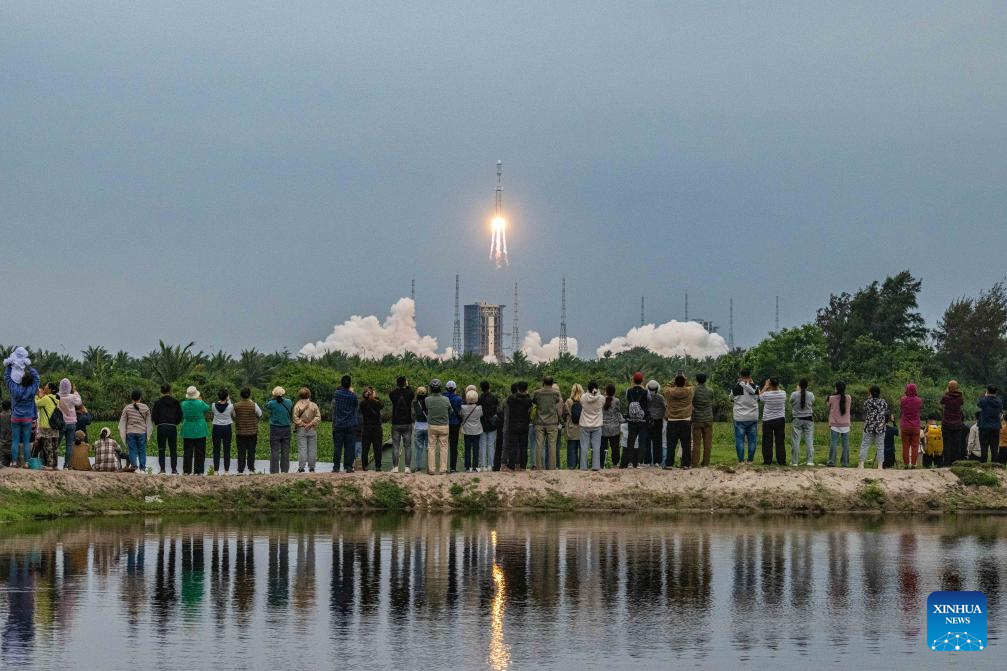
A Long March-8 rocket, carrying the relay satellite Queqiao-2 for Earth-Moon communications, blasts off at the Wenchang Space Launch Center in south China's Hainan Province, March 20, 2024. After 24 minutes of flight, the satellite separated from the rocket, and entered the planned Earth-Moon transfer orbit with the perigee at 200 kilometers and the apogee at 420,000 kilometers. The satellite's solar panels and communications antennae were unfolded, according to the China National Space Administration. (Xinhua/Pu Xiaoxu)
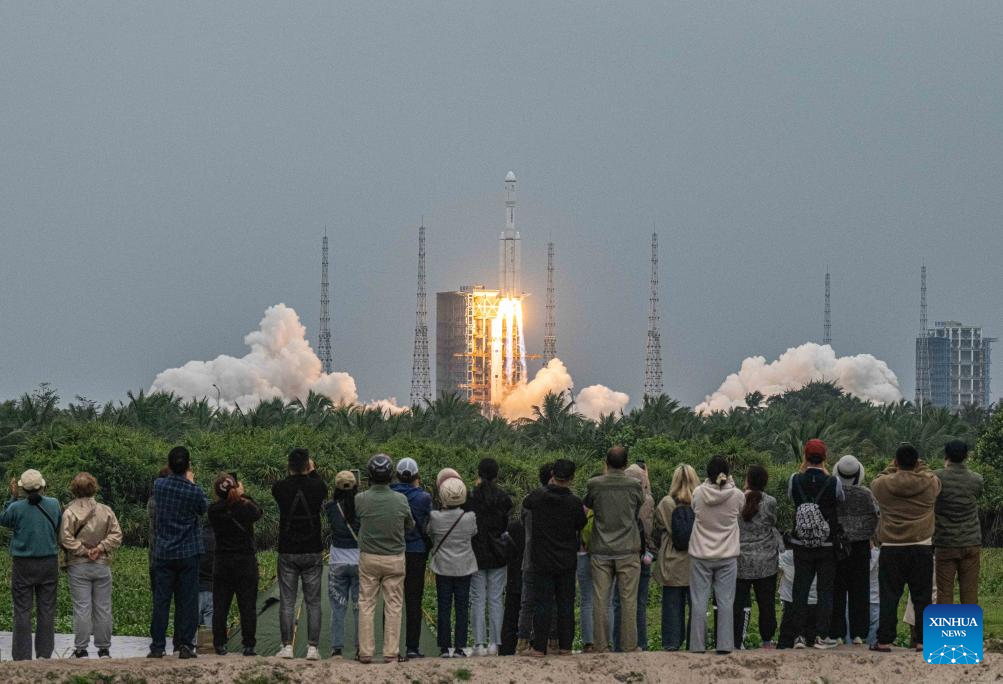
A Long March-8 rocket, carrying the relay satellite Queqiao-2 for Earth-Moon communications, blasts off at the Wenchang Space Launch Center in south China's Hainan Province, March 20, 2024. After 24 minutes of flight, the satellite separated from the rocket, and entered the planned Earth-Moon transfer orbit with the perigee at 200 kilometers and the apogee at 420,000 kilometers. The satellite's solar panels and communications antennae were unfolded, according to the China National Space Administration. (Xinhua/Pu Xiaoxu)
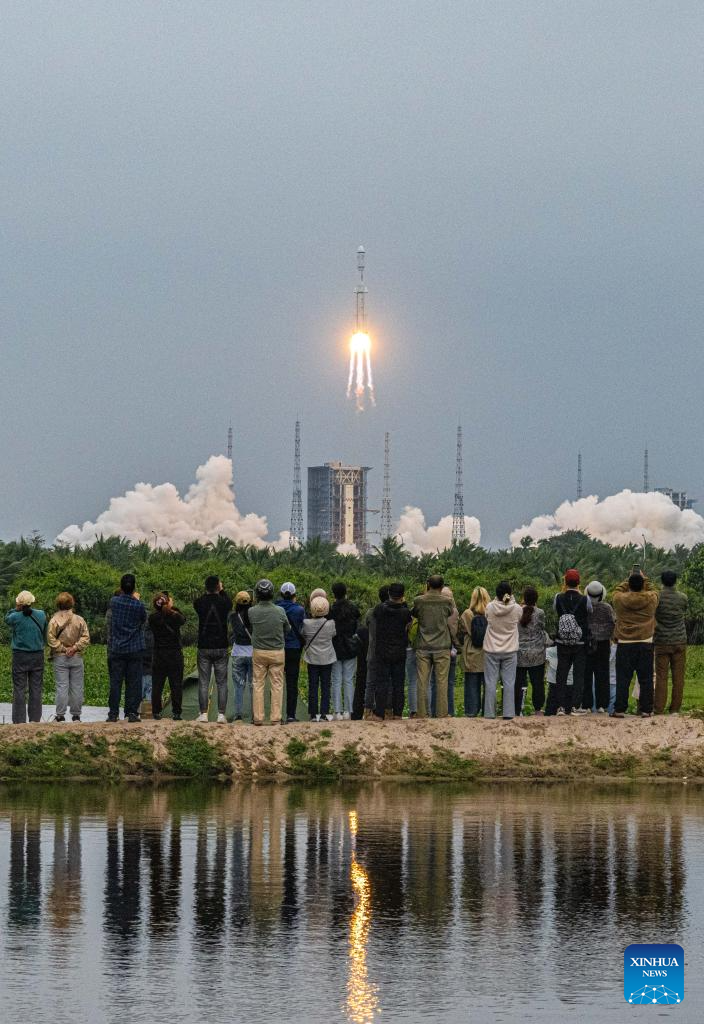
A Long March-8 rocket, carrying the relay satellite Queqiao-2 for Earth-Moon communications, blasts off at the Wenchang Space Launch Center in south China's Hainan Province, March 20, 2024. After 24 minutes of flight, the satellite separated from the rocket, and entered the planned Earth-Moon transfer orbit with the perigee at 200 kilometers and the apogee at 420,000 kilometers. The satellite's solar panels and communications antennae were unfolded, according to the China National Space Administration. (Xinhua/Pu Xiaoxu)

A Long March-8 rocket, carrying the relay satellite Queqiao-2 for Earth-Moon communications, blasts off at the Wenchang Space Launch Center in south China's Hainan Province, March 20, 2024. After 24 minutes of flight, the satellite separated from the rocket, and entered the planned Earth-Moon transfer orbit with the perigee at 200 kilometers and the apogee at 420,000 kilometers. The satellite's solar panels and communications antennae were unfolded, according to the China National Space Administration. (Xinhua/Yang Guanyu)

A Long March-8 rocket, carrying the relay satellite Queqiao-2 for Earth-Moon communications, blasts off at the Wenchang Space Launch Center in south China's Hainan Province, March 20, 2024. After 24 minutes of flight, the satellite separated from the rocket, and entered the planned Earth-Moon transfer orbit with the perigee at 200 kilometers and the apogee at 420,000 kilometers. The satellite's solar panels and communications antennae were unfolded, according to the China National Space Administration. (Xinhua/Yang Guanyu)













 Android版
 iPhone版