







 新华报业网
新华报业网
"Milk costs about $3.99 a gallon (roughly 28 yuan for 3.79 liters)."
"In China it's 20 yuan for 900 milliliters."
"University tuition is about $30,000 a year (about 210,000 yuan)."
"Ours is about 8,000 yuan a year."
Chatrooms on lifestyle app Xiaohongshu, also known as Rednote, have been buzzing with conversations like these as users compare their daily expenses. The trend, which was dubbed "cyber reconciliation" (赛博对账, sài bó duì zhàng) by netizens, has become one of the most popular buzzwords of 2025.
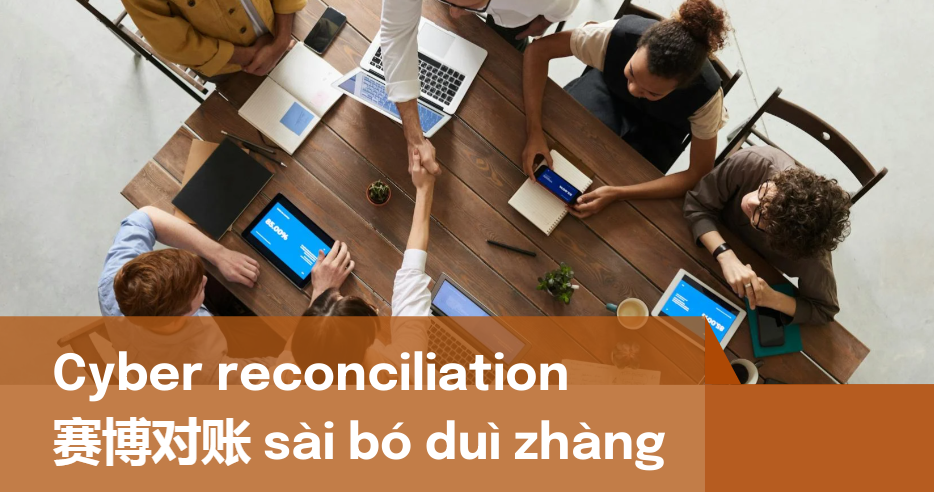
According to Yaowen Jiaozi, a Shanghai-based linguistic journal, "cyber" is a transliteration of the English prefix, referring to anything related to the internet. Originally appearing in science fiction and computer science literature, the term has gradually permeated popular culture to describe high-tech, digital and networked phenomena. The metaphor of "reconciliation" — an accounting term for the process of comparing two sets of financial records — describes how users cross-check their personal "life ledgers" to clear up misconceptions and bridge gaps in mutual understanding.
The term "cyber reconciliation" first emerged in early 2025 amid uncertainty over a potential U.S. ban on TikTok. American users flocked to Chinese platforms like Xiaohongshu, where they connected directly with Chinese people to share glimpses of their daily lives. Chinese locals reciprocated with equal enthusiasm, teaching American users how to use Xiaohongshu and offering a window into their own day-to-day routines.
What unfolded was a form of mutual discovery. As American mothers calculated the costs of child care and Chinese fathers broke down the expenses of public kindergartens, stereotypes began to quietly crumble. The "American Dream" revealed its underlying economic pressures, while China's social welfare system — long overlooked by Western media — finally gained the recognition it deserved.
The significance of "cyber reconciliation" goes far beyond comparing details on cost-of-living — it has become a form of "grassroots diplomacy." When American user Brecken Neumann posted photos of himself and his daughter on Xiaohongshu, a reply with a cute family photo from a Shanghai user was pinned to the top. Two months after exchanging photos online, the two families met in person in Shanghai. Moved by the story, netizens from both countries flooded the post with blessings.
Beyond these meetings, American users are paying "cat tax" by sharing pet photos, learning to cook Chinese dishes, practicing Chinese songs and even helping out with homework. Xiaohongshu — a platform outside the Western mainstream — has unexpectedly become a neutral ground, providing a direct channel for Chinese and American citizens to let "life itself" do the talking. As a result, many users have said their long-held biases were shattered and their perceptions recalibrated.
In an era dominated by talk of "decoupling," this buzzword brings a glimmer of hope. It serves as a reminder that authentic glimpses into daily life can bridge cultural divides, proving that an open mind is often the best tool for dismantling long-standing barriers. After all, in the shared ledger of human experience, some numbers speak a universal language.












 Android版
 iPhone版